
Proper semi truck grille guard measurement ensures correct equipment fitment and prevents ordering errors. This guide provides measurement procedures, required tools, and verification methods for accurate equipment ordering.
HERD manufactures protection equipment for commercial trucks requiring precise measurements for proper fitment.
Understanding Fitment Requirements
Grille guard fitment depends on precise measurements of your truck’s front-end configuration. Different truck models have varying mounting points, clearances, and specifications affecting fitment.
Grille guards require accurate dimensional data for proper equipment selection. Proper measurements ensure grille guards mount securely and maintain appropriate clearances. Incorrect measurements lead to fitment problems requiring returns or modifications that increase costs.
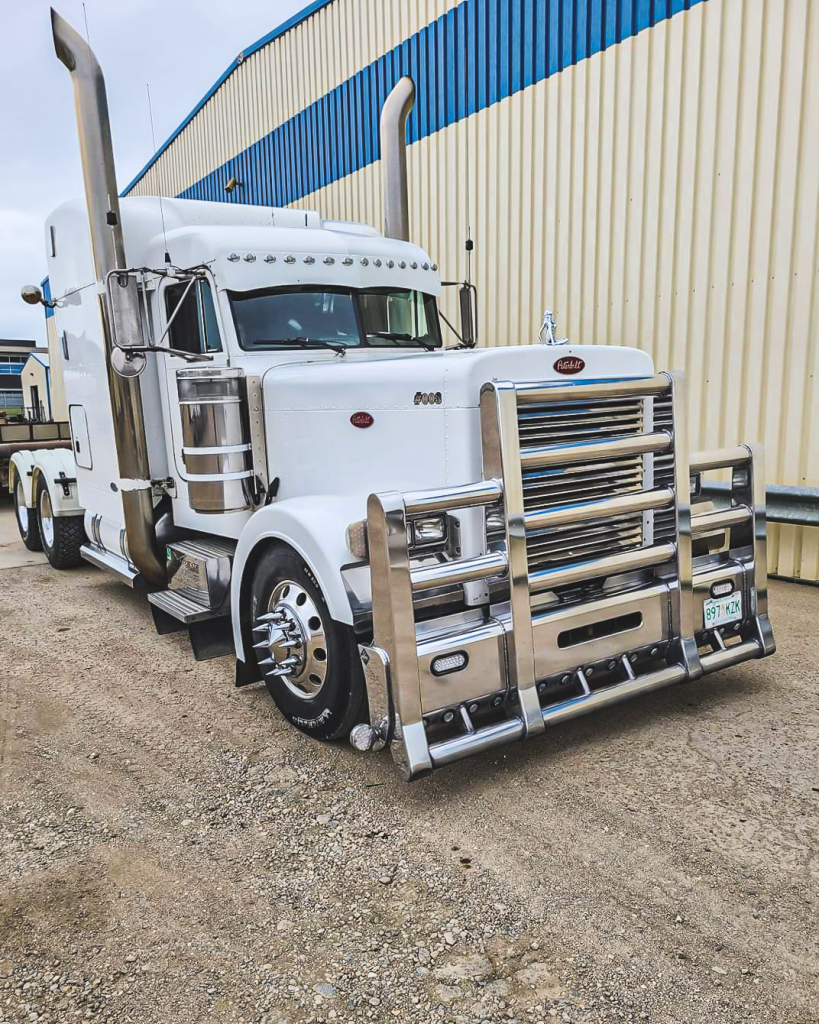
Measurement Tool Requirements
You’ll need basic measurement tools for data collection. Metal tape measures provide better accuracy than fabric tapes and should extend at least 25 feet. Digital calipers help measure smaller features with precision.
Bring materials for recording measurements, including worksheets and photography equipment for documenting mounting points and configuration details. Wear appropriate safety equipment and work in well-lit areas.
Pre-Measurement Preparation
Position trucks on level ground with wheels chocked and parking brakes engaged. Park in areas with adequate lighting and working space for front-end access.
Document your truck’s configuration including year, make, model, and equipment packages. Note any front-end modifications. Photograph front-end areas from multiple angles for reference.
Create a measurement checklist, ensuring you capture all required dimensions before starting.
Critical Measurement Points
Mounting Point Locations: Measure mounting point height from ground level and lateral spacing between points. Document mounting point positions relative to reference points. Grille guards typically mount to tow receivers, while truck guards use frame integration, requiring different measurement approaches.
Width Measurements: Measure front-end width at bumper, grille, and hood levels. Record the widest point across the front end.
Height Measurements: Record vertical dimensions from ground level to bumper top, grille center, and hood leading edge.
Depth Measurements: Measure front-end depth from the forward-most point to mounting locations.
Clearance Measurements: Measure clearances to hood edges, fenders, lights, and sensors. Verify hood opening clearances.
Measurement Procedures
Step 1: Establish Reference Points Identify fixed reference points. Ground level provides vertical reference and truck centerline serves as lateral reference.
Step 2: Collect Width Dimensions Measure across the front end at multiple heights. Take measurements at consistent points on both sides of the centerline.
Step 3: Record Height Dimensions Measure vertical dimensions from ground level to key features. Verify the ground surface is level first.
Step 4: Document Depth Dimensions Measure depth from the forward-most point to mounting locations using straight-edge techniques.
Step 5: Verify Clearances Measure all clearance dimensions. Open and close the hood while noting clearance points.
Step 6: Double-Check Critical Dimensions Verify key measurements by repeating collection. Investigate any discrepancies.
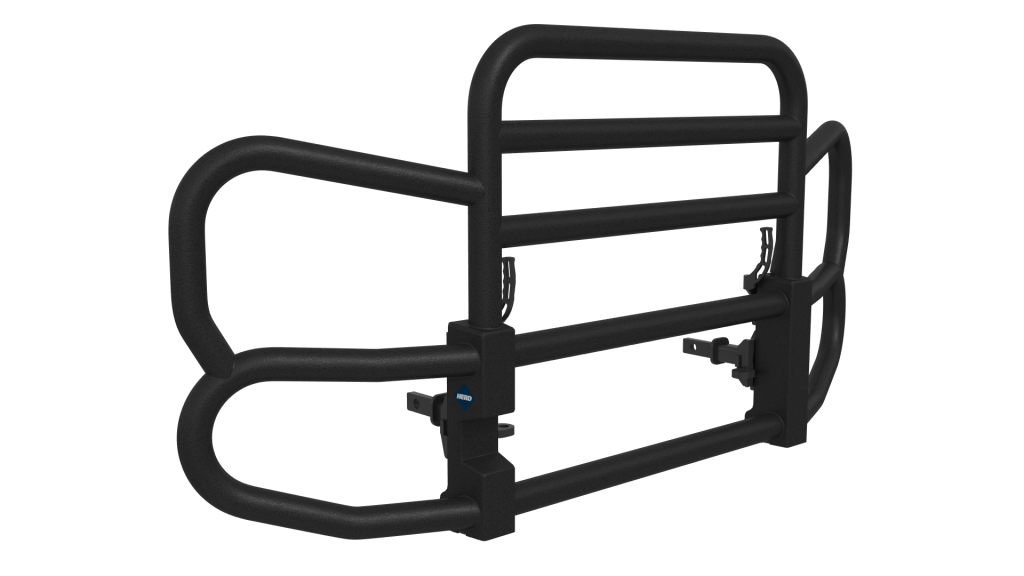
Measurement Accuracy Standards
Mounting point measurements require accuracy within one-quarter inch. Overall width and height dimensions can use half-inch accuracy. Clearance measurements need quarter-inch precision.
Record measurements clearly with proper units (inches or millimeters). Include measurement location descriptions with each recorded value. Verify symmetry by comparing left and right side measurements.
Common Measurement Challenges
Measure curved surfaces to the furthest extension point. Use extension tools for hard-to-reach locations. Document any asymmetrical configurations thoroughly. Trucks with aftermarket modifications may have non-standard dimensions requiring detailed documentation.
Measurement Documentation
Record all measurements on organized worksheets with clear labels. Date worksheets and identify the specific truck measured. Take photographs of front-end areas including mounting point locations and unique features. Create summary sheets highlighting critical dimensions.
Working With Equipment Suppliers
Provide complete measurement information to suppliers including dimensional data, configuration details, and photographs. Specify measurement units clearly. Discuss measurements with supplier technical staff who can verify whether measurements indicate standard configurations. Request fitment confirmation before processing orders.
Measurement Quality Checks
Review all measurements for internal consistency. Verify symmetry between left and right sides. Consider whether measurements fall within reasonable ranges for your truck type. Have another person review measurements when possible.
Ensure Proper Fitment
Accurate measurements form the foundation for successful grille guard fitment. Following structured procedures ensures you collect reliable data supporting equipment selection.
Document measurements thoroughly and communicate clearly with equipment suppliers. Verification steps prevent fitment issues that create delays and additional costs.
For grille guard options and fitment assistance, contact HERD to discuss your truck configuration.
Frequently Asked Questions
What tools do I need for semi truck grille guard measurement?
You need basic measurement tools including a metal tape measure extending at least 25 feet for overall dimensions. Digital calipers help measure smaller features requiring precision. Bring materials for recording measurements including worksheets or notebooks. Photography equipment documents mounting point locations and configuration details. A straightedge or level helps verify measurement angles. Chalk or removable markers let you mark temporary reference points. Work in well-lit areas and wear appropriate safety equipment. These basic tools enable accurate measurement collection for most grille guard fitment applications without specialized equipment.
Which measurements are most critical for grille guard fitment?
Mounting point locations represent the most critical measurements since they determine where grille guards attach to your truck. Measure mounting point height from ground level and lateral spacing between points. Overall front-end width affects grille guard sizing. Clearance measurements around hood edges and operational features prevent interference issues. Measure from hood leading edge to mounting points to verify grille guard positioning allows proper hood operation. Record these dimensions with highest accuracy since they directly affect fitment.
How accurate do my measurements need to be?
Mounting point measurements require accuracy within one-quarter inch since they affect direct fitment. Overall width and height dimensions can use half-inch accuracy for general sizing verification. Clearance measurements need quarter-inch precision to ensure adequate space. Use measurement tools appropriate for required accuracy levels. Digital calipers provide precision for critical dimensions while tape measures work for general measurements. Always round conservatively when precision is limited. Suppliers can work with reasonable measurement accuracy if you communicate precision levels clearly in your documentation.
What if my truck has aftermarket modifications?
Document all modifications thoroughly in your measurement records. Aftermarket bumpers, lighting, or mounting modifications may affect grille guard fitment. Photograph modifications from multiple angles showing how they change front-end configuration. Measure around modified areas carefully noting any dimensional changes from stock configuration. Provide detailed modification information when discussing measurements with suppliers. They need to know about non-standard configurations to verify fitment. Some modifications may require custom mounting solutions or prevent standard grille guard installation.
Should I take measurements myself or have professionals do it?
Many truck operators successfully collect their own measurements using basic tools and systematic procedures. If you’re comfortable with measurement tools and follow structured procedures, self-measurement works well for standard applications. Professional measurement may be worthwhile for complex configurations, extensive modifications, or when high precision is critical. Fleet maintenance teams often develop measurement procedures for consistent results across multiple trucks. Consider professional assistance if measurements reveal unusual configurations or if suppliers indicate your measurements show potential fitment concerns.