
When you’re running your own truck, every dollar you spend gets weighed against every dollar you need to make. That’s the reality of being an owner-operator. You’re not managing a fleet budget with a spreadsheet and a fleet manager behind you. It’s your money, your truck, and your livelihood all wrapped into one. So when someone brings up adding a grille guard, the first question is fair: are grille guards worth it for semi trucks when you’re the one signing the check?
The short answer is yes – but it’s worth understanding exactly why. This isn’t about looking good on the road, though a well-built guard does that, too. It’s about what happens when your front end takes a hit, and you don’t have one. For an owner-operator, a single serious front-end collision isn’t just a maintenance issue. It can mean significant time off the road, out-of-pocket costs, and in some cases, enough financial pressure to threaten the whole operation.
HERD has been building front-end protection for commercial trucks since 2003. This article lays out the honest case for why grille guard protection makes sense as a business decision for independent operators.
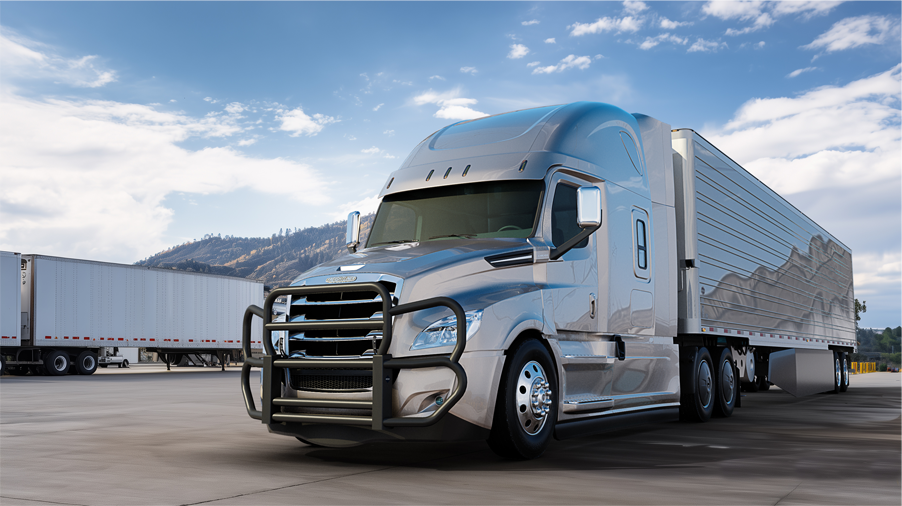
The Business of One: What’s Actually at Stake
Most trucking content talks about fleets. Dozens of units, maintenance crews, and risk spread across multiple trucks. That’s not your situation. As an owner-operator, you have one truck. One source of income. One asset that has to keep moving to keep the bills paid.
When that truck goes down, everything stops. You’re not making miles, you’re not getting paid, and if the repair is significant, you’re spending money you earned on the road just to get back on it. That financial reality is what makes front-end protection a different calculation for you than it is for a large carrier.
A grille guard doesn’t eliminate every risk. But it does reduce the likelihood that a deer strike on a dark stretch of highway turns into a situation where your truck is sitting in a shop while your bills keep coming.
What Typically Damages an Unprotected Front End
You already know the road doesn’t play nice. Here’s what actually takes out unprotected front ends on commercial trucks:
Wildlife Collisions
Deer and moose strikes are a real and regular hazard, especially on rural routes and overnight runs. A full-speed collision with a large animal on an unprotected truck sends the impact directly into the grille and radiator. The radiator alone is a high cost to address, and that’s before you factor in any grille, hood, or wiring damage. These strikes happen fast, often at night, and there’s rarely time to react.
Road Debris
Highway debris – blown tire chunks, loose cargo, dropped equipment – comes at your front end with very little warning. At highway speed, the impact can punch through an unprotected grille and reach the radiator or surrounding components. It’s the kind of damage that can sideline a truck without a dramatic collision event.
Brush and Low-Speed Contacts
Not all damage happens at speed. Trucks that run rural routes, job site roads, or logging corridors push through brush and vegetation regularly. Over time, or in a single instance of dense overgrowth, that contact can compromise the front end. Yard maneuvers and dock approaches can also result in low-speed contact with fixed objects that still manage to cause real damage.
What a Grille Guard Actually Does for You
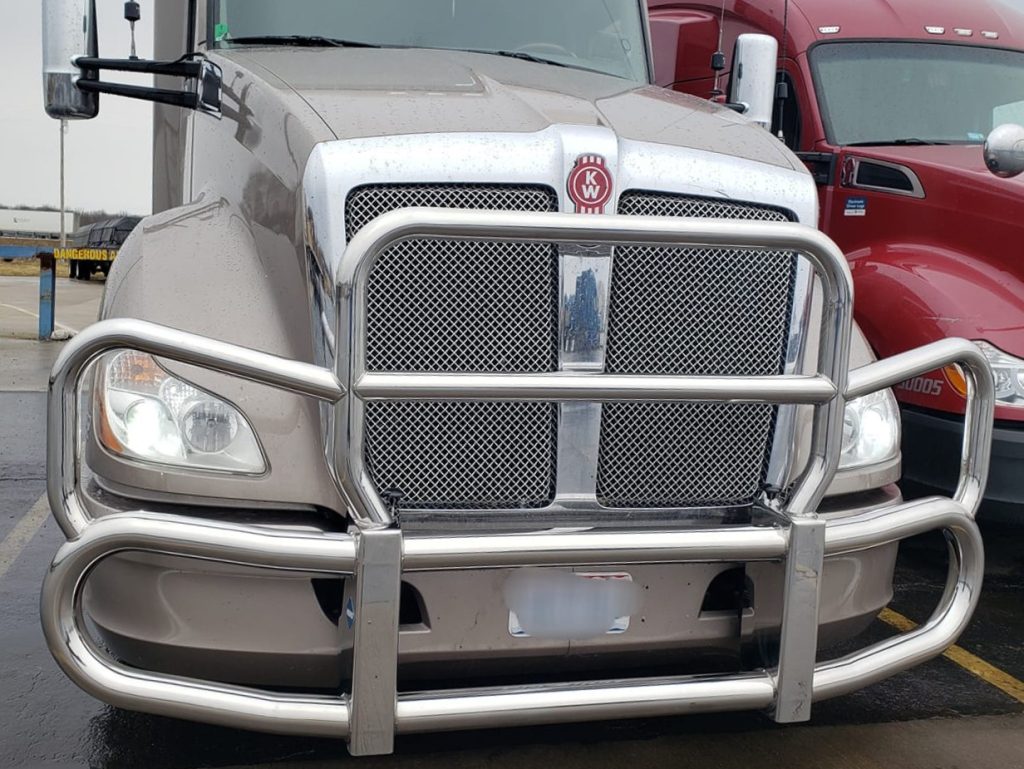
A grille guard is a steel barrier between the road and your radiator. It’s built to take the hit, so your truck doesn’t have to. On HERD’s grille guard lineup, every Gen 4 guard is built around:
- 3″ round stainless steel tubing engineered for maximum strength
- Heavy gauge steel brackets mounting directly into tow receivers
- Welded gussets at the uprights and tubes for added structural integrity
- Tapered box uprights engineered for front-end structural strength
- CAS compatibility so your collision avoidance systems keep working
That last point matters for owner-operators too. Modern trucks often come equipped with radar-based collision avoidance systems. HERD’s Gen 4 guards are engineered with CAS compatibility built in, so you’re not sacrificing your truck’s safety systems to add front-end protection.
The Grip Latch system is another practical feature worth knowing about. It lets you swing the guard open for front-end service access without removing the whole unit – which means your shop time doesn’t get extended every time someone needs to get to the front of the truck.
Two Options Built for the Job
HERD offers two grille guard options in the Gen 4 lineup, both purpose-built for commercial truck use and available in polished stainless, satin, or black powder coat.
The Grille Guard 200 delivers solid front-end collision protection with a clean, professional look. It’s designed in conversation with fleet managers and built to complement the truck’s existing profile while providing real defense against wildlife, debris, and brush contact.
The Grille Guard 300 is built for serious front-end protection with a bold, distinctive look, ready to meet the demands of the road. Both guards share the same core construction – 3″ stainless tubing, welded gussets, heavy-gauge tow-receiver brackets, and the Grip Latch system. The choice comes down to your routes, working conditions, and the look you want on your truck.
The Warranty Behind the Product
One thing that matters when you’re spending your own money is knowing the product stands behind itself. HERD backs every grille guard with a 3-year warranty on the guard structure and a 5-year warranty on the Grip Latch mechanism.
That 5-year Grip Latch warranty is notable. It’s a component you or your technician will use regularly for front-end access, and HERD’s confidence in it reflects the quality of how it’s built. For an owner-operator who can’t afford to deal with product failures on top of everything else, warranty coverage is part of the value calculation.
What Owner-Operators Actually Say
HERD’s customers speak to the value directly. Drivers and fleet operators who’ve run HERD guards through wildlife strikes and road hazards consistently say the protection delivered when it counted. The stories aren’t hypothetical – they come from trucks that took real hits and kept the damage away from what matters most.
For an owner-operator, that’s exactly the point. You’re not looking for a product that performs well in theory. You’re looking for one that holds up when the road doesn’t go your way.
Is It Worth It? Here’s the Honest Answer
So, are grille guards worth it for semi trucks when you’re an owner-operator? Here’s the straight answer:
- You have one truck and one income. There’s no second unit to pick up loads while yours is in the shop.
- Wildlife strikes, debris impacts, and brush contact happen on commercial routes – it’s a matter of when, not if, depending on where you run.
- Front-end damage on an unprotected truck means repair costs plus lost revenue while you’re off the road. A guard reduces that exposure significantly.
- HERD’s grille guards are built for commercial trucks, backed by real warranty coverage, and designed to work with your truck’s existing systems.
The guard pays for itself the first time it takes the hit that your radiator didn’t have to.
Ready to Protect Your Rig?
If you’re running your own truck and you’ve been on the fence about front-end protection, the HERD grille guard lineup is worth a real look. Built for the trucks you’re running, backed by a solid warranty, and available through dealers who know the product.
Contact HERD to find an authorized dealer near you and confirm the right fitment for your specific make, model, and year.
Are Grille Guards Worth It for Semi Trucks: Frequently Asked Questions
Are grille guards worth it for semi trucks if I only run one truck?
That’s exactly when they matter most. When you run one truck, that truck is your entire business. There’s no backup unit, no fleet to absorb the hit, and no shared risk. A single serious front-end collision can mean real downtime and real out-of-pocket costs. A grille guard puts a solid barrier between those events and your radiator. For owner-operators, that protection is a business decision as much as a safety one.
Do grille guards work with modern truck safety systems?
Yes. HERD’s Gen 4 grille guards are engineered with CAS compatibility, meaning the bracket design and guard positioning account for forward-mounted radar sensors. Post-installation verification is still recommended since sensor placement varies by make, model, and year – but CAS compatibility is built into the design from the start.
What’s the difference between the Grille Guard 200 and the Grille Guard 300?
Both are Gen 4 guards built for commercial trucks and share the same core construction: 3″ stainless steel tubing, welded gussets, heavy gauge tow-receiver brackets, the Grip Latch system, and CAS compatibility. They’re available in polished stainless, satin, or black powder coat. The GG-200 offers solid protection with a streamlined profile. The GG-300 has a bolder, more distinctive look built for serious front-end demands. Your routes and personal preference are the main deciding factors.
What kind of warranty does HERD offer on grille guards?
HERD backs every grille guard with a 3-year warranty on the guard structure and a 5-year warranty on the Grip Latch mechanism. For an owner-operator spending their own money, knowing the product stands behind itself is part of the value calculation. The Grip Latch warranty in particular reflects HERD’s confidence in a component that gets regular use every time someone needs front-end access.
How do I find the right HERD grille guard for my truck?
HERD builds grille guards for Volvo, Freightliner, International, Kenworth, Mack, Peterbilt, and Western Star. Guards are model-specific, so fitment is confirmed by make, model, and year rather than a universal fit. The best starting point is reaching out to an authorized HERD dealer who can confirm compatibility for your specific truck configuration before you order.