
Fleet managers and technical specialists don’t have time for guesswork. When you’re evaluating front-end protection for a working International ProStar, you need to know how a grille guard actually holds up – not just what the spec sheet says. International ProStar grille guard performance comes down to a few factors: structural integrity, system compatibility, mounting reliability, and real-world durability across various road conditions.
HERD has been building commercial truck protection equipment since 2003. The Gen 4 grille guard lineup was engineered with these demands in mind. This article walks through the key performance categories fleet managers and technical specialists should evaluate, what the testing methodology looks like, and how HERD’s construction holds up against those criteria on the International ProStar platform.
This is a structured look at what performance evaluation involves for this application and what verified construction details tell you about long-term reliability.
Why Performance Testing Matters for Fleet Operations
Front-end protection is a financial decision, not just a safety one. Every fleet manager knows the math – a single deer strike or brush collision without a grille guard can mean thousands in grille, radiator, and hood damage, plus unexpected downtime.
Testing and evaluation give you confidence before specifying a guard across multiple units. The goal is to answer a few straightforward questions:
- Does the guard’s construction handle real-world impact forces without bracket failure or tube deformation?
- Does the mounting system stay secure under load, vibration, and extended use?
- Does the guard work with the ProStar’s existing radar and camera systems?
- Will the finish hold up through weather, wash cycles, and road exposure?
Getting those answers right the first time matters. Let’s break down each performance category.
Structural Construction Analysis
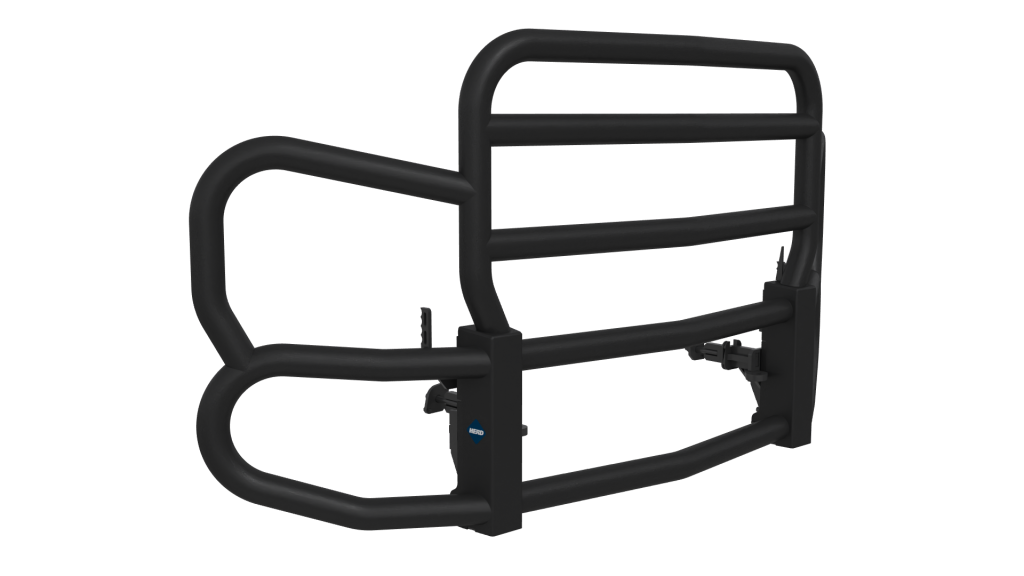
HERD’s Gen 4 grille guards are built around solid 3″ stainless steel round tubing. That tube diameter is engineered for maximum strength – it’s a deliberate construction choice built for serious front-end protection on commercial trucks.
The uprights use a tapered box design. According to HERD, this construction approach serves two purposes:
- Strength – the tapered box upright is built to handle the demands of commercial front-end protection
- Weight – the design reduces overall guard weight without pulling back on structural integrity where it matters
The guard body is built from 304 stainless steel – a high-quality material known for strength and durability in commercial applications.
Bracket and Mounting System Performance
The bracket system is where a lot of grille guards fall short in real-world use. HERD’s Gen 4 guards use AR450/Hardox-rated steel brackets. Here’s what that means for fleet performance:
- Material rating: High-hardness, abrasion-resistant steel
- Mounting method: Integrates directly with tow receivers
- Hardware: Included with each guard
- Load path: Connects to the truck’s primary frame structure
The brackets mount into the ProStar’s tow receivers. This is a clean, purpose-built mounting method – the tow receiver is already a structural integration point on the frame, which means the load path goes directly into the truck’s primary structure rather than relying on secondary attachment points.
All necessary hardware is included with each guard purchase.
CAS Compatibility and Electronics Verification
Modern International ProStar configurations often include collision avoidance systems, forward-facing radar sensors, and cameras. This is one of the most important performance considerations for fleet managers specing a grille guard today.
HERD’s Gen 4 grille guards are engineered with CAS compatibility built into the bracket design and guard positioning. That means the forward sensor field isn’t blocked by the guard structure in standard configurations. However, post-installation verification is still a required step. Here’s why:
Different ProStar model years and configurations may have variations in sensor placement. A guard that clears sensors on one model year may require adjustment on another. Technical specialists should verify the following after installation:
- Radar sensor signal – confirm no interference with the collision avoidance function
- Forward camera field of view – check that the guard doesn’t create blind spots in the camera image
- Lighting systems – confirm no shadows or obstruction from the guard structure
- Horn and other front-mounted components – check clearance and operation
This isn’t a knock against the guard design. It’s standard practice for any front-end installation on a modern commercial truck.
Finish Performance and Long-Term Durability
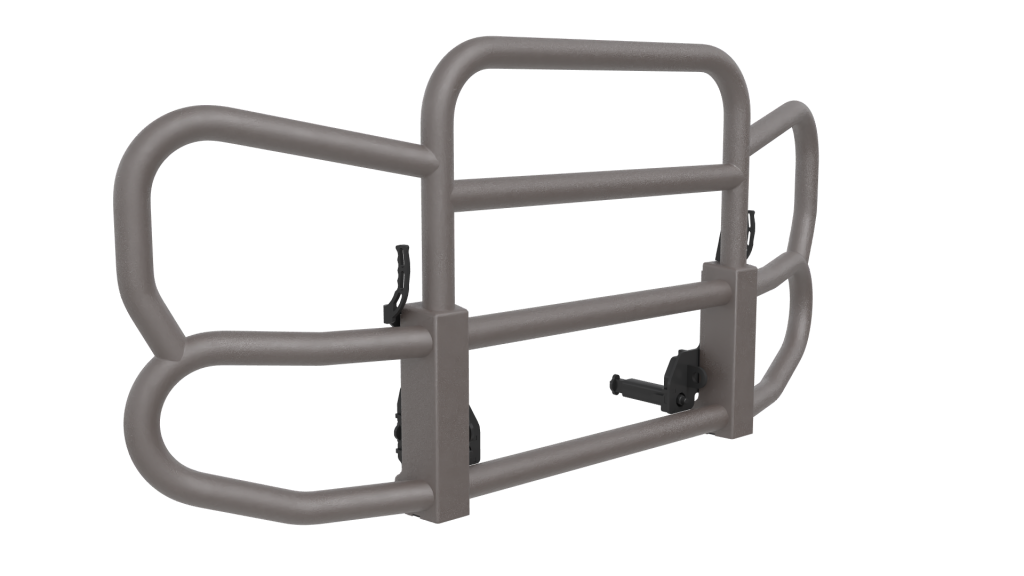
HERD’s Gen 4 grille guards – the Grille Guard 200 and Grille Guard 300 – are available in three finish options: polished stainless, satin, and black powder coat. From a durability standpoint, each finish has different maintenance characteristics worth considering for fleet use.
- Polished Stainless: Built on a 304 stainless steel substrate, which handles corrosion well in most road environments. Polished surfaces show road film more visibly but clean up well through standard truck washing.
- Satin Stainless: A lower-sheen finish that’s more forgiving of minor surface marks while offering the same corrosion resistance as the 304 base. Popular with fleets wanting a clean look without polished-surface upkeep.
- Black Powder Coat: A durable matte finish. Powder coat can chip over time with repeated heavy contact, which is typical of powder coat applications across the industry.
For fleets running northern routes with road salt, off-highway segments, or regular brush contact, the stainless-based finishes generally offer better long-term corrosion performance.
Warranty as a Performance Indicator
Warranty terms are a legitimate performance signal. A manufacturer backing its product with a strong warranty is telling you something about their confidence in how the guard holds up in service.
HERD offers:
- 3-year warranty on the guard structure
- 5-year warranty on the Grip Latch mechanism
The Grip Latch is the quick-release system that lets the guard swing open for front-end service access without full removal. It’s a high-use component – drivers and technicians interact with it every time front-end work is done. A 5-year warranty on that mechanism specifically is worth noting.
Real-World Application: Fleet Evaluation Summary
For fleet managers evaluating International ProStar grille guard performance across a mixed fleet, the key checkpoints are straightforward:
- Confirm that the specific ProStar model year and configuration are covered in HERD’s fitment guide
- Specify the appropriate finish based on operating environment and maintenance preferences
- Plan installation through an authorized International dealership with HERD product familiarity
- Build post-installation system verification into your installation checklist
- Document installation for warranty records
For fleets ordering five or more guards with matching SKUs, HERD offers a free freight program – worth factoring into total deployment cost when speccing multiple units.
Ready to Spec Your International ProStar Fleet?
If you’re evaluating grille guard options for your International ProStar fleet, HERD’s Gen 4 lineup gives you verified construction details, a strong warranty, and compatibility with modern truck systems. Browse the full grille guard lineup or contact HERD to connect with an authorized dealer who can confirm fitment for your specific ProStar configuration.
Frequently Asked Questions
What makes HERD grille guards a strong choice for International ProStar fleets?
HERD’s Gen 4 grille guards use 304 stainless steel tubing, AR450/Hardox steel brackets, and a mounting system that integrates with the truck’s tow receivers. The guards are engineered with CAS compatibility – a real consideration on modern ProStar configurations with radar-based collision avoidance. Backed by a 3-year structural warranty and a 5-year Grip Latch warranty, they’re built for commercial fleet use, not light-duty applications.
How does the mounting system perform on the International ProStar specifically?
The brackets mount into the ProStar’s tow receivers – already integrated structural points on the frame. Impact loads travel into the primary frame structure rather than relying on secondary attachment points. AR450/Hardox brackets are known for high hardness and abrasion resistance, making them well-suited for the demands of commercial front-end protection.
Will a HERD grille guard interfere with my ProStar’s radar or camera systems?
HERD’s Gen 4 guards are engineered with CAS compatibility, meaning bracket design and guard positioning account for forward sensor placement. That said, post-installation verification is always recommended. Sensor placement can vary between ProStar model years, so specialists should confirm radar function, camera field of view, and lighting operation after installation.
What finish options are available for fleet use, and which hold up best in harsh environments?
HERD’s Gen 4 grille guards come in polished stainless, satin stainless, and black powder-coat. For fleets operating in road salt environments or routes with regular brush contact, the stainless-based finishes – polished or satin – generally offer better long-term corrosion performance. Black powder coat provides a clean, uniform look and holds up well under normal conditions, though powder coat surfaces can show wear over time with repeated heavy contact.
How should fleet managers handle the installation process for multiple ProStar units?
Installation should go through authorized international dealerships with HERD product experience. For fleet-scale deployments, coordinate installation with scheduled maintenance to reduce downtime. HERD offers free freight on orders of five or more grille guards with matching SKUs, which simplifies logistics for multi-unit deployment. Confirm fitment for your specific ProStar model year before ordering, and build post-installation system verification into your standard checklist.