
Every hour a truck sits idle is an hour it isn’t generating revenue. For logistics managers responsible for fleet availability, that equation is never far from mind. Scheduling, route coverage, delivery commitments, driver utilization – all of it depends on trucks being operational. When a front-end incident takes a unit offline, the disruption doesn’t stop at the repair bill.
Reducing semi truck downtime starts with prevention. The most effective way to limit the operational impact of a front-end incident is to reduce the severity of that incident in the first place. Front-end protection is where that starts.
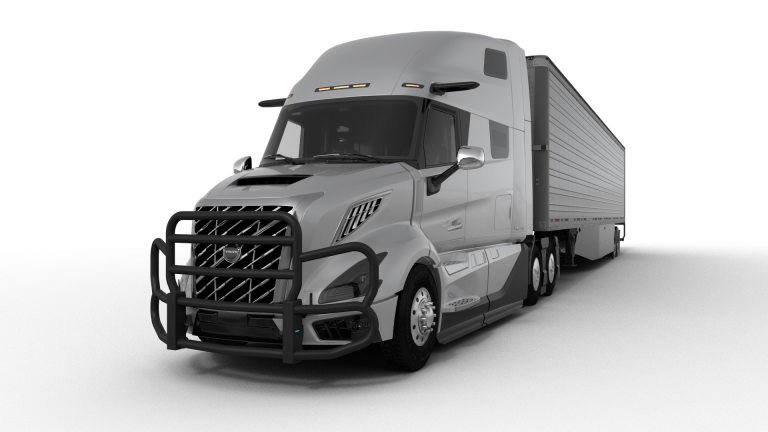
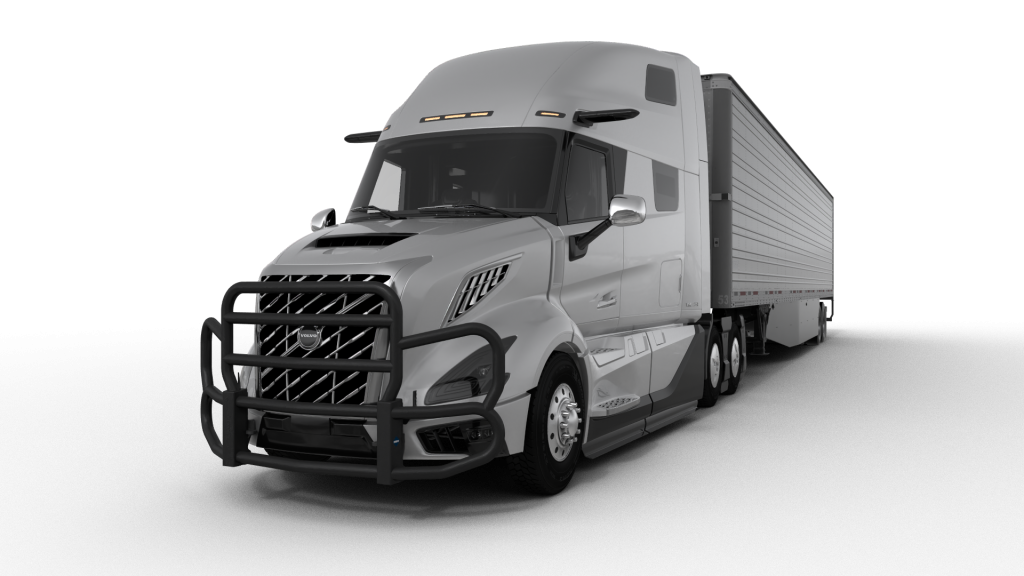
With over two decades in the commercial truck protection space, HERD builds truck guards and grille guards designed to limit front-end damage during wildlife strikes, debris impacts, and brush contact – events that routinely pull trucks from active service and create gaps in route coverage.
The Operational Cost of Front-End Downtime
For fleet operations running commercial routes, front-end damage from a collision event is one of the hardest downtime scenarios to plan around. Unlike mechanical failures that develop gradually and can be anticipated through maintenance schedules, a front-end incident is sudden and unpredictable. There’s no lead time to adjust routing or arrange substitute coverage.
When a truck goes down for front-end repairs, the operational impact typically includes:
- Loss of available unit – The truck is out of service for the repair duration, reducing fleet capacity. For smaller fleets, that impact is proportionally larger.
- Route disruption – Loads assigned to that unit need to be redistributed, delayed, or declined. Each outcome carries its own operational cost.
- Repair timeline uncertainty – Front-end damage can involve multiple components: grille, radiator, hood, and sensors. The actual repair window isn’t always clear upfront.
- Compounding schedule pressure – Other drivers and units absorb the downed truck’s scheduled runs, affecting their availability for subsequent routes.
The goal of front-end protection isn’t to make trucks invincible. It’s to reduce the severity of front-end incidents enough that a truck can stay in service – or return to service faster – rather than sitting in a shop while route capacity shrinks.
What Front-End Incidents Actually Look Like in Fleet Operations
The scenarios that pull trucks off the road for front-end damage follow predictable patterns. Logistics managers running routes through rural corridors, high-wildlife zones, or areas with heavy road debris exposure will recognize these:
Wildlife Strikes
A driver hits a deer or larger animal on a rural highway at speed. On an unprotected truck, the grille and radiator absorb the impact directly. Radiator damage can force the run to end at a roadside location, well before the truck reaches a repair facility – adding schedule disruption on top of the repair itself.
A guard-equipped truck in the same scenario takes the impact on the guard structure. The radiator and surrounding components are shielded from direct contact, reducing the risk of immediate operational failure.
Road Debris Impacts
Blown tire fragments, dropped cargo, and road debris are a persistent hazard on interstate routes. Without front-end protection, debris that strikes the grille puts the radiator and components behind it directly in the exposure zone, with the potential to trigger an unplanned stop that cascades through the day’s schedule.
Brush and Low-Speed Contact
Not all downtime comes from highway-speed events. Trucks running job site roads or rural routes with overgrown right-of-ways can sustain front-end contact that accumulates over time. A guard absorbs that contact rather than passing it through to the grille and bodywork behind it.
How HERD Front-End Protection Supports Fleet Uptime
HERD truck guard and grille guard lineup addresses the downtime equation at the point of impact, built for commercial use from the ground up.
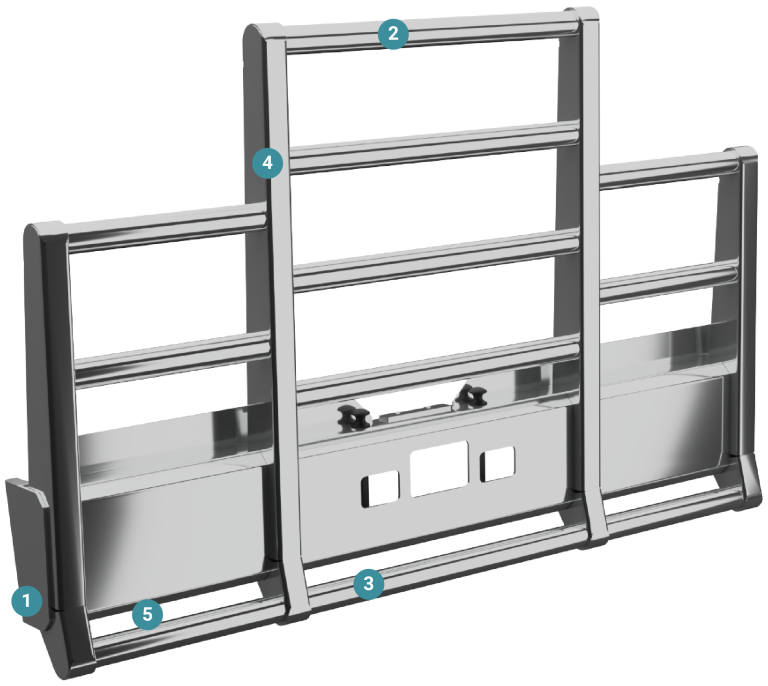
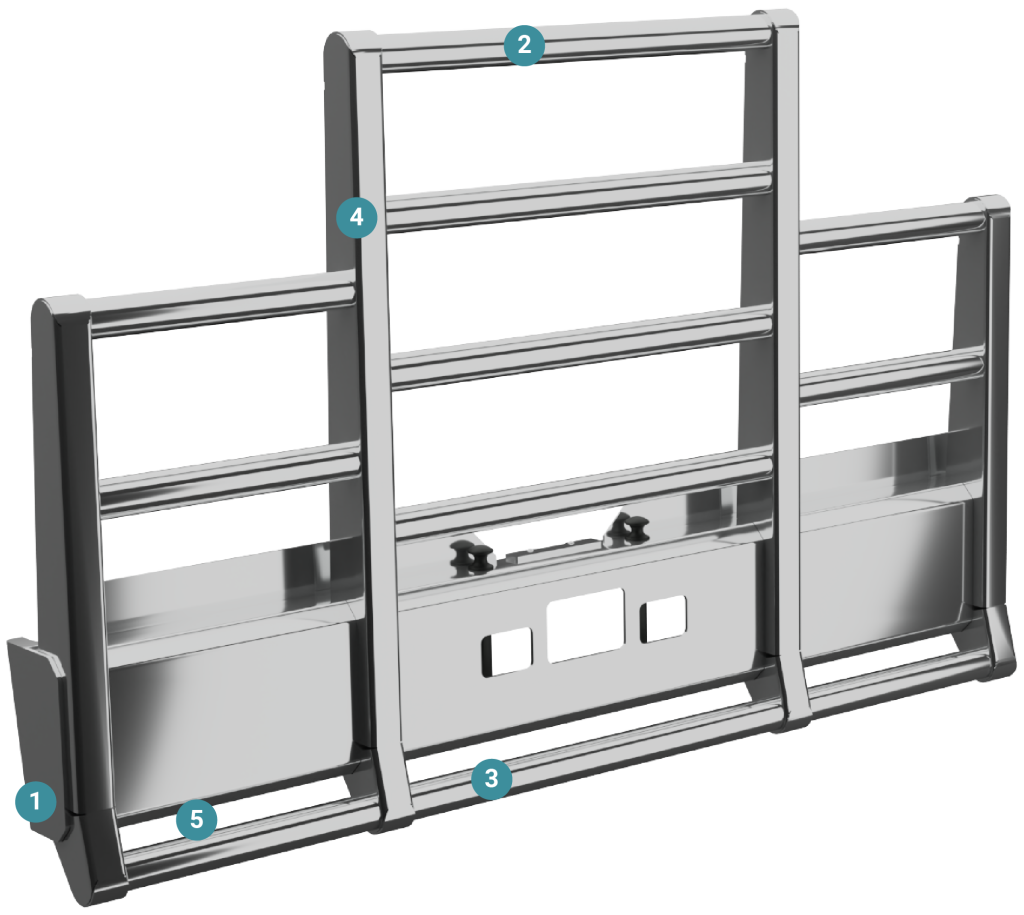
Key construction elements across the HERD Gen 4 grille guards:
- 3″ round 304 stainless steel tubing – a tube diameter and material grade engineered for maximum strength in commercial applications
- AR450/Hardox-rated heavy gauge steel brackets mounted directly into tow receivers, anchoring the guard to established structural attachment points on the truck’s frame
- Welded gussets at uprights and tube connections, adding internal structural reinforcement at the joints
- Tapered box uprights add structural rigidity to the overall guard profile
- CAS compatibility was worked into the bracket and guard positioning from the design stage
The Grip Latch system is worth noting in the fleet context. It lets the guard swing open for front-end access without detaching the guard from the truck – keeping maintenance workflows on schedule rather than adding time for guard removal and reinstallation.
Truck Guards vs. Grille Guards: Matching Protection to Route Risk
Not every fleet faces the same front-end risk profile. HERD builds both truck guards and grille guards for Volvo, Freightliner, International, Kenworth, Mack, Peterbilt, and Western Star.
Grille guards protect the grille and radiator. For fleets where front-end incidents are primarily wildlife or debris-related and the routes don’t involve sustained brush contact or higher-impact environments, a grille guard addresses the most common downtime triggers directly.
The Grille Guard 200 delivers reliable protection with a streamlined profile suited to long-haul and regional operations. The Grille Guard 300 is built for operations where front-end contact is more frequent or severe, with a bolder construction suited to higher-exposure routes. Both carry a 3-year structural warranty and a 5-year warranty on the Grip Latch mechanism.
Truck guards extend protection to the lower bumper area and surrounding bodywork. For fleets on logging corridors, construction site access roads, or rural routes with significant wildlife pressure, a truck guard provides broader front-end coverage than a grille guard.
HERD truck guard lineup includes the Aero, Defender, and Texas models, each suited to different operating environments and fleet specifications.
CAS Compatibility: Keeping Safety Systems Operational
Modern commercial trucks increasingly come equipped with radar-based collision avoidance systems. For logistics managers specifying front-end protection across a fleet, CAS compatibility is a fleet management requirement, not an afterthought.
A guard that interferes with forward-facing radar sensors creates its own operational problem. HERD Gen 4 guards are built with CAS compatibility worked into the design from the start – the guard structure and bracket positions are developed around sensor placement, not adjusted for it afterward.
Post-installation verification is still a required step on any truck with active CAS, since sensor placement varies by make, model, and production year. For fleet operations running standardized maintenance protocols, that verification fits naturally into the post-installation checklist.
Building Front-End Protection into Fleet Spec
For logistics managers evaluating front-end protection as an operational investment, the calculation is direct: the cost of a guard against the operational cost of a single front-end downtime event.
Front-end incidents involving the radiator, hood, or sensors aren’t single-component repairs. They involve multiple parts, shop scheduling, and days where the truck isn’t moving. Front-end protection that limits the severity of those events supports the operational goal of keeping trucks available and routes covered.
HERD offers a free freight program on orders of five or more guards with matching SKUs, a practical consideration for fleet managers standardizing front-end protection across multiple units in a single deployment.
Spec the Right Guard for Your Fleet
Front-end protection matched to the specific make, model, and operating environment of the trucks in your fleet is more effective than a generic approach. HERD guards are model-specific – fitment is confirmed by make, model, and year.
Contact HERD to reach an authorized dealer who can confirm the right guard specification for your fleet’s trucks and operating profile.
Frequently Asked Questions
How does a truck guard reduce semi-truck downtime?
A truck guard absorbs front-end impact before it reaches the components that keep the truck operational – primarily the radiator and surrounding systems. In a wildlife strike or debris impact, a guard-equipped truck is positioned to limit damage to the guard itself rather than the components behind it. That protection supports shorter repair timelines, faster return to service, and reduced route disruption compared to an unprotected front-end incident.
Which HERD guard is best for fleet operations with high wildlife exposure?
For fleets running routes with frequent wildlife exposure, both the Grille Guard 200 and Grille Guard 300 address the primary downtime risk: grille and radiator damage from animal strikes. The GG-300 provides additional coverage for operations with higher or more severe exposure. For routes with brush or debris contact, a truck guard may be the stronger fit. Route profile and operating conditions should drive the selection conversation with a HERD dealer.
Does adding a grille guard affect scheduled maintenance workflows?
HERD Gen 4 guards include the Grip Latch system, which allows the guard to open for front-end access without detaching it from the truck. For fleet maintenance operations where shop time is planned and tracked, the Grip Latch keeps front-end service access practical without extending scheduled maintenance windows.
What is the warranty coverage on HERD commercial truck guards?
HERD backs its Gen 4 grille guards with a 3-year warranty on the guard structure and a 5-year warranty on the Grip Latch mechanism. Truck guards carry a 3-year structural warranty. For fleet managers specifying protection across multiple units, warranty coverage is part of the total cost of ownership picture.
Can HERD guards be ordered for an entire fleet at once?
Yes. HERD offers a free freight program on orders of five or more guards with matching SKUs. For fleet managers standardizing front-end protection across multiple units of the same make and model, this simplifies procurement. Fitment confirmation with a HERD dealer before ordering ensures the right guard is specified for each truck.