
When you’re putting serious miles on a truck, a guard isn’t something you think about once and forget. It’s out there with you every run – taking hits on rural highways through Minnesota and Manitoba, deflecting debris on the interstates in Texas and Kansas, dealing with whatever the roads through Ontario and Wyoming throw at you. The decision to add one isn’t a spec sheet exercise. It’s a working decision made by someone who lives in that cab.
Choosing a truck guard for long haul is different from speccing one for a regional fleet. The priorities shift when you’re the one doing the pre-trip in the dark, the one dealing with the consequences of a deer strike on a rural highway at night, and the one who has to explain to a shop why front-end access is blocked by a guard that won’t open without a full removal job. HERD builds guards specifically for commercial trucks – and this article covers what actually matters to drivers who run hard miles, not what looks good on paper.
Route Type Comes First
Before anything else, the right guard comes down to where you run. Not all routes create the same front-end exposure, and not all guards make sense for every situation.
- Heavy wildlife corridors. If your runs take you through the upper Midwest, the Dakotas, Montana, Nebraska, or the Canadian provinces of Ontario, Alberta, and Saskatchewan, wildlife exposure is a regular reality. On these routes, grille and radiator protection isn’t optional.
- Interstate and highway routes. Debris exposure on major interstates – blown tire chunks, dropped cargo, road hazards – is lower-profile but still real. Profile and fitment matter as much as protection level on these runs.
- Rural delivery and job site routes. Brush contact, tight access roads, back-country corridors – these create accumulated front-end contact that shows up over time. A guard absorbs that instead of the truck.
Knowing your route profile before you talk to a dealer cuts the conversation down to the options that actually make sense for you.
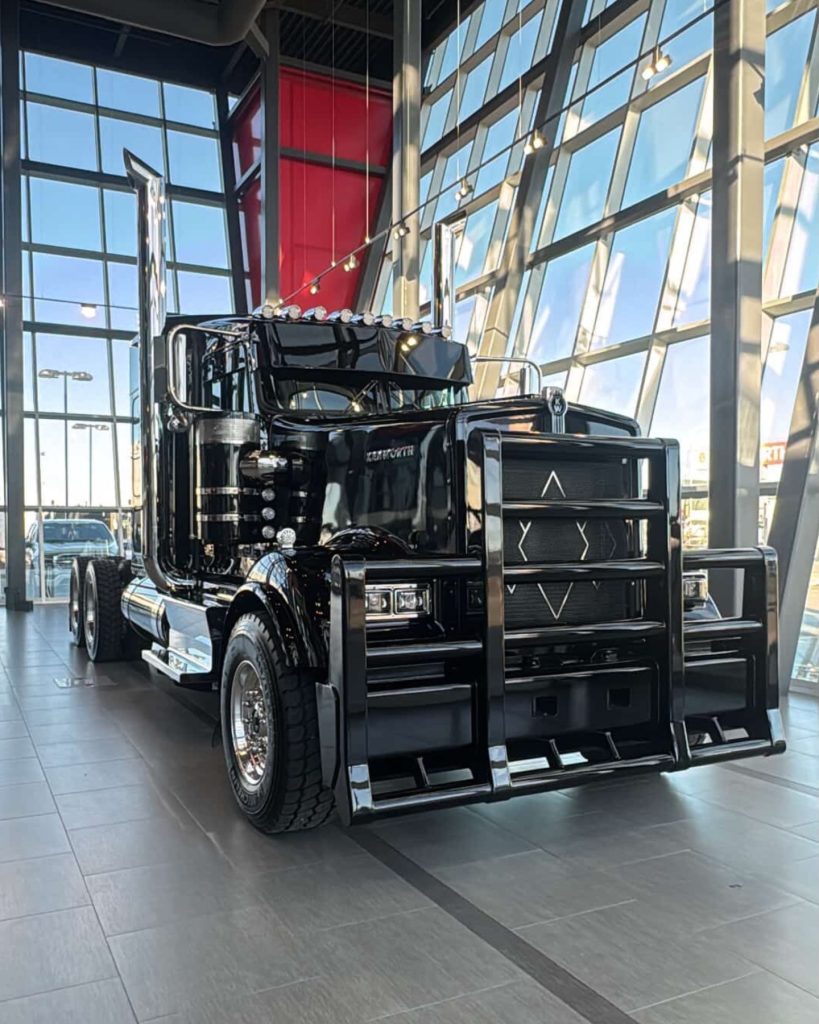
Pre-Trip Access: The Thing Nobody Talks About
Here’s something that doesn’t make it onto spec sheets but matters to every driver: how does the guard work when you need to get to the front of the truck?
Pre-trip inspections happen every day, often in the dark, often in a hurry. If the guard makes that harder – if getting to the front of the truck requires working around the guard or tools just to get access – that’s friction every single shift. Over weeks and months, that adds up.
The Grip Latch system on HERD guards opens the guard for front-end access without the guard leaving the truck. That’s the difference between a quick check and a drawn-out process. For a driver doing a pre-trip before a long pull, that matters more than most specs on a product page. At the shop, technicians can reach the front end without a full guard removal – keeping the job from getting bigger than it needs to be.
Fitment: Does It Actually Belong on This Truck?
A guard that doesn’t fit right creates problems that outlast the install. Gaps, misalignment, rattling at highway speed – along with clearance issues that show up once the truck is moving – are signs the guard wasn’t built for your specific truck.
HERD builds guards with model-specific fitment for Volvo, Freightliner, International, Kenworth, Mack, Peterbilt, and Western Star, confirmed by make, model, and year. For a long-haul driver running hard daily miles, a guard that fits right is one you stop thinking about. One that doesn’t remind you of itself constantly.
What to Look for in Construction
Drivers who run hard miles don’t need a deep engineering discussion – but a few construction details are worth knowing because they affect how the guard holds up over the long haul.
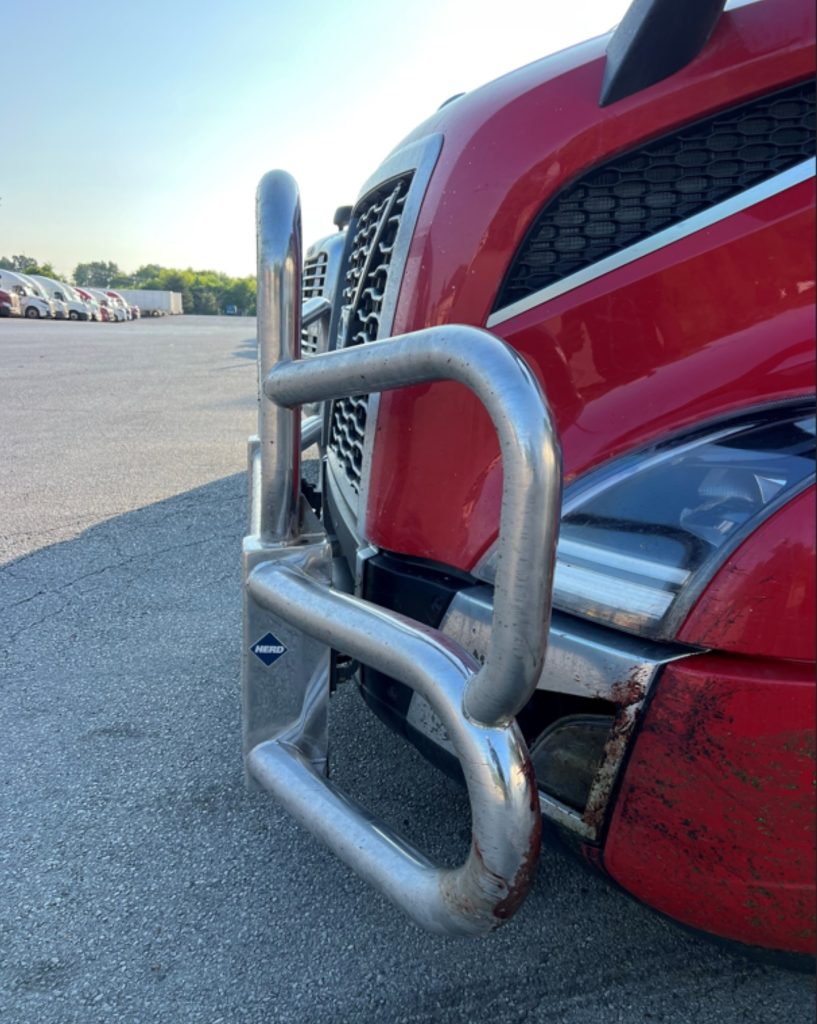
- Steel and tube diameter. HERD Gen 4 grille guards use 3-inch round 304 stainless steel tubing – commercial-grade material in a size chosen for strength. For a driver putting serious route hours on this guard, that starting point matters.
- Bracket connection. AR450/Hardox-rated steel brackets mount into the truck’s tow receivers – a connection into the frame, not sheet metal. When the guard takes a hit, that’s where the force goes.
- Internal reinforcement. Welded gussets at the uprights and tube connections add structural reinforcement at the joints – the kind of build detail that keeps a guard holding its shape through repeated impacts over the life of the truck.
- Latch durability. The Grip Latch carries a 5-year warranty. For a component you interact with on every pre-trip, that reflects how it’s built.
Finish: More Practical Than It Sounds
Most discussions about the finish treat it as purely cosmetic. For long-haul drivers, it’s also a maintenance question.
HERD Gen 4 guards come in three finishes:
- Polished stainless – Looks sharp when it’s clean. Requires more attention to stay that way, especially on runs through road salt corridors or brush-heavy routes. If you take pride in how your truck presents, this is the one.
- Satin stainless – The lower-maintenance option. Holds its appearance without demanding much between washes. For drivers who want a solid look on the truck without adding to the upkeep routine, satin gets the job done.
- Black powder coat – Blends with the front of the truck. Works well on darker specs or for drivers who prefer a guard that doesn’t draw attention to itself.
All three start from the same 304 stainless base. The choice is about what kind of upkeep you want to commit to over the years the guard is on your truck.
Guard vs. Grille Guard: Knowing the Difference
Long-haul drivers often face a choice between a full truck guard and a grille guard. The difference comes down to what you’re protecting and where you run.
A grille guard covers the grille and radiator – the components most at risk from wildlife strikes and debris. For drivers on interstate and highway routes with predictable front-end risk, this is the focused solution. HERD Grille Guard 200 offers solid protection with a clean profile for drivers who want coverage without a heavy visual footprint. The Grille Guard 300 steps up for heavier exposure routes.
A truck guard covers more of the front end, including the lower bumper area and surrounding bodywork. For drivers running logging roads, rural delivery corridors, or routes with regular brush and debris contact, a full truck guard gives you broader coverage. HERD lineup includes the Aero, Defender, and Texas models, each built for different operating conditions.
Match the guard to where you actually drive, not to what looks most impressive at the fuel stop. A well-matched guard handles what your routes throw at it and stays out of the way the rest of the time.
Warranty: What You Actually Need to Know
HERD backs the Gen 4 grille guard structure with a 3-year warranty and the Grip Latch with a 5-year warranty. For an owner-operator putting real route hours on a guard, those terms reflect confidence in the product, not fine print.
Find the Right Guard for Your Routes
The right guard is the one that fits your truck properly, matches your route exposure, and is built to hold up through the miles you actually run. That conversation is worth having with a dealer who knows the product.
Contact HERD to reach an authorized dealer who can go through your routes, confirm fitment for your specific make and model, and point you toward the right guard.
Frequently Asked Questions
What’s the most important factor when choosing a truck guard for long haul?
Route type, without question. Before the finish, before model selection – know what your front end actually faces on a daily run. A driver through heavy wildlife zones in the upper Midwest or the Canadian provinces needs something different from a driver on major interstate corridors. Get the route profile right first, and every other decision falls into place.
Does the Grip Latch system make a real difference for pre-trip inspections?
Yes – and drivers who’ve used it notice right away. The Grip Latch lets the guard open for front-end access without removing it from the truck. On a pre-trip in the dark before a long pull, that’s a meaningful difference in workflow. Over the course of a driving year, a guard that opens cleanly is one less complication at the start of every run.
How do I know which HERD guard fits my truck?
HERD builds model-specific guards for Volvo, Freightliner, International, Kenworth, Mack, Peterbilt, and Western Star, confirmed by make, model, and year – not approximate compatibility. Before ordering, confirm your specific configuration with an authorized HERD dealer. That conversation takes a few minutes and heads off fitment problems down the road.
What’s the difference between the Grille Guard 200 and the Grille Guard 300?
Both are Gen 4 guards built on the same platform – 304 stainless tubing, AR450/Hardox brackets, welded gussets, Grip Latch, and CAS compatibility. The GG-200 is clean and streamlined, suited for drivers who want solid protection without a heavy front-end presence. The GG-300 is built for drivers on heavier exposure routes who want more guard up front. Your routes and your preference for how the front end looks are what separate them.
Do HERD guards work with collision avoidance systems?
Yes. HERD Gen 4 guards are built with CAS compatibility as part of the design – sensor placement is accounted for in the guard structure from the outset rather than patched in afterward. Verification after installation is still worth doing since radar sensor positioning differs across makes, models, and years. But picking a HERD guard doesn’t mean sacrificing your collision avoidance. Both work together.